Discover the best digital marketing tools, normally $27 as my free gift. FREE|Success
Hey, folks, welcome to Week in Review (WiR), TechCrunch’s regular roundup of the past week in tech. Too busy to check the headlines this week? Don’t sweat it. That’s why WiR exists — we’ll get you caught up to speed.
This edition of WiR features pieces about a fake AI-generated “South Park” episode; the surging downloads of Threads, an app that shares the same name as Meta’s Twitter competitor; and Tesla’s first Cybertruck build. We also recap the CEO of OnlyFans stepping down; Wix’s new tool that can create websites on the fly, using generative AI; and Plex’s free Winamp-inspired music player.
That’s a lot to cover, so let’s get cracking. Oh, and if you haven’t already, sign up here to get WiR in your inbox every Saturday.
Most read
Poor timing for AI-generated TV: AI startup Fable Studios demoed its platform this week, using it to create a full, fake “South Park” episode in which Cartman tries to apply deepfake technology to the media industry. The tech was impressive, Devin writes, but — juxtaposed against the ongoing strike of creatives in TV and film — the stunt came across as a tad inartful.
Not a good look for Microsoft security: Microsoft still doesn’t know — or want to share — how China-backed hackers stole a key that allowed them to stealthily break into dozens of email inboxes, including those belonging to several government agencies. The company first disclosed the incident last Tuesday, attributing the monthlong activity to a newly discovered espionage group it’s calling Storm-0558, which it believes has a strong nexus to China.
The other Threads surges to new heights: Instagram’s Twitter clone Threads enjoyed a fairly fruitful first week in existence, sailing past 30 million users in the first 24 hours. But it’s had the unintended effect of thrusting Threads, an unrelated app first pitched as a Slack alternative, into the spotlight. Threads (the Slack alternative) reportedly racked up more than 880,000 downloads on iOS between July 6 and July 12, after Meta’s Threads launched, having had few downloads prior to this point.
Telsa unveils the first Cybertruck build: Tesla over the weekend said its first, much-anticipated Cybertruck came off the production line in Texas. The debut of the long-delayed, futuristic-looking pickup truck comes in the lead-up to Tesla’s second-quarter 2023 earnings call.
OnlyFans CEO steps down: After about two and a half years at the helm, Ami Gan is leaving OnlyFans. Chief strategy and operations officer Keily Blair will take over as CEO. As Amanda writes, OnlyFans is perhaps the best-known creator platform that supports adult content; according to Gan, the company paid out $10 billion to creators while she was CEO.
New sites, generated by AI: Wix, a longtime fixture of the web-building space, is betting that today’s customers don’t particularly care to spend time customizing every aspect of their site’s appearance. The company’s new AI Site Generator tool, announced this week, will allow Wix users to describe their intent and generate a website complete with a homepage, inner pages and text and images — as well as business-specific sections for events, bookings and more.
Plex makes its Winamp-inspired player free: Plexamp, the music player originally incubated by the Labs division of media company Plex, is now free. The project was first launched in 2017 as a subscription-based spin on the classic Winamp media player app, offering visualizations to accompany your tunes, tools for programming mixes, and more recently, a ChatGPT-powered “Sonic Sage” feature that builds unique playlists from users’ music libraries.
VanMoof e-bikes, saved: Since struggling e-bike startup VanMoof confirmed it has asked for a deferment of payment in Holland, there’s been a question hanging over the VanMoof bikes out there in the wild. Riding to the rescue, somewhat improbably, is Cowboy, VanMoof’s e-bike competitor over the border in Belgium. Cowboy’s “Bikey” app enables VanMoof riders to generate their unique digital key and keep riding, Mike writes.
Audio
TechCrunch’s roster of podcasts is, as the kids say, giving. Tune in for great new content this week.
On Equity, PitchBook venture guru Kyle Stanford came to riff with the crew on the venture capital in Q2 2023: the good, the bad, and the late stage.
The latest episode of Found, meanwhile, spotlighted Catherine Tabor, the founder and CEO of Sparkfly, a company that helps brands with marketing and customer engagement. Tabor talked about building a company fluid enough to adapt to changing technology trends over the last decade and how she was dismissed by venture capitalists despite landing notable customers.
TechCrunch+
TC+ subscribers get access to in-depth commentary, analysis and surveys — which you know if you’re already a subscriber. If you’re not, consider signing up. Here are a few highlights from this week:
Electric utilities drive customers to startups: Of all the companies that should be eager to embrace the electric transition, electric utilities would seem to be at the top of the list. Yet they also appear to be some of the most hesitant. Startups are taking advantage of the situation, Tim writes.
Mixed-gender founding teams raise over a billion dollars: U.S. startups with mixed-gender founding teams — meaning they have at least one female founder — raised $24.1 billion in the first half of 2023, which breaks down to $17.2 billion in Q1 and $6.9 billion in Q2, per the latest PitchBook data. That’s a big deal — but it’s important to note that startups with all-women founding teams are still struggling to raise money this year.
Ripple’s XRP case and the lack of regulatory clarity: Last week, the crypto community celebrated a U.S. federal court case that ruled Ripple’s XRP token does not make up illegal securities sales — but only in some cases. Though many celebrated the ruling, it’s not a true win for crypto — Jacquelyn explains why.
Get your TechCrunch fix IRL. Join us at Disrupt 2023 in San Francisco this September to immerse yourself in all things startup. From headline interviews to intimate roundtables to a jam-packed startup expo floor, there’s something for everyone at Disrupt. Save up to $600 when you buy your pass now through August 11, and save 15% on top of that with promo code WIR. Learn more.
Discover the best digital marketing tools, normally $27 as my free gift. FREE|Upgrade
The YouTuber apology video is an art form. A penitent creator must be remorseful, but not theatrical. Concise, but not rehearsed. Honest, but not defensive. Above all, an apology video cannot be memeable, or it’ll never be taken seriously.
Colleen Ballinger’s apology saga, however, will be one of the most memorable in YouTube history because it just keeps getting worse.
Representatives for Ballinger, who built a devoted following of young viewers as the satirical and often offensive character Miranda Sings, are now denying claims that she filed copyright infringement claims on videos reacting to her ukulele apology song.
The song, in which Ballinger addresses allegations of fostering inappropriate and exploitative relationships with her teenage fans, is one of the most absurd attempts at apologizing ever documented online. The fans coming forward accuse Ballinger of sending them unsolicited nudes of another creator to make fun of her body, using her group chat of underage fans as on-call emotional support throughout her divorce, exploiting and humiliating minors during her live shows and above all, abusing the power dynamic between herself and her fans.
Her response? A song about the “toxic gossip train” — an agonizing 10-minute lyrical car crash that dismisses the allegations as misinformation fueled by the “mob mentality” of the internet.
“Everyone just believes that you are the type of person who manipulates and abuses children. I just wanted to say that the only thing I’ve ever groomed is my two Persian cats,” Ballinger croons. “I’m not a groomer, just a loser who didn’t understand I shouldn’t respond to fans. And I’m not a predator, even though a lot of you think so, because five years ago I made a fart joke.”
It’s a mess. Here’s what’s going on.
Who is Colleen Ballinger?
Colleen Ballinger, 36, started posting YouTube videos as Miranda Sings in 2008. “Miranda” is a self-obsessed young woman who’s obsessed with stardom, despite her inability to actually sing. The character, who wears bright red lipstick and has a speech impediment, is egotistical, socially awkward and largely ignorant of current events.
Ballinger’s musical parodies as Miranda became a viral sensation, and at her peak she had roughly 19 million YouTube subscribers between her personal channel and her Miranda Sings channel. Her videos consisted of vlogs (both as Colleen and as Miranda), trending YouTube challenges, satirical vocal lessons and off-key covers of pop songs. Ballinger was particularly popular with children, and featured other kids’ creators like JoJo Siwa and Sophia Grace Brownlee on her channel.
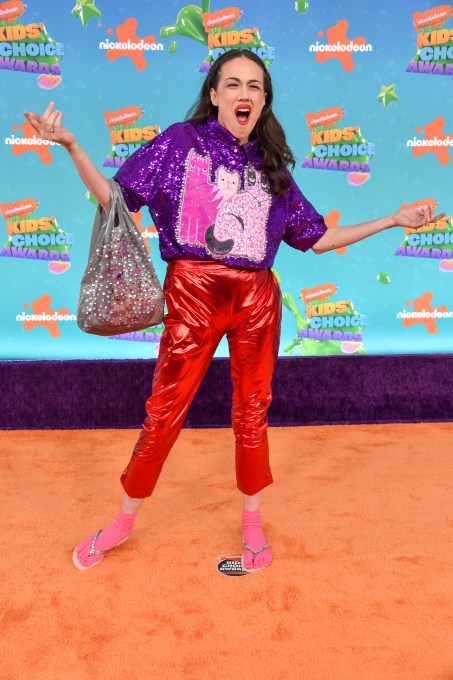
As Miranda, Ballinger made offensive jokes that revolved around incest and racist stereotypes. Image Credits: Gregg DeGuire/Getty Images for Nickelodeon
As Miranda, she often made jokes about pedophilia, incest and racially insensitive stereotypes — invideos, Miranda would reference the “Daddy Saddle,” an object that allowed her to ride around on her “Uncle Jim.” Affinity Magazinecriticizedthe character for mocking disabled people and perpetuating harmful stereotypes about disabilities. In 2020, sheapologizedfor impersonating Latina women in a since-deleted video with her sister.
She also regularly toured as Miranda, performing live variety shows blending comedy and music. Ballinger was in the middle of a national tour last month when former fans alleged that she had inappropriate and exploitative relationships with them when they were minors. In the aftermath of her apology video, the remaining tour dates were quietly canceled,NBC News reported.
The first wave of allegations
In a2020 YouTube video, then-17-year-old Adam McIntyre said that he had been ghostwriting some of Ballinger’s tweets as her “social media intern” without pay, and alleged that she had abused her power as a creator to foster inappropriate relationships with her young fans.
He said that the relationship started when he was 13 years old, and that at one point, Ballinger sent him lingerie. In 2017 and 2018, Ballinger told him that Miranda Sings wasn’t doing well “because she couldn’t really be problematic as the character anymore,” McIntyre said in his video, and that she eventually asked him for help with rebranding the character.
He began suggesting social media ideas for both Miranda Sings and Ballinger’s personal accounts, and she gave him access to the Miranda Sings Twitter account in March 2020. In screenshots McIntyre shared in his video, Ballinger told him that she wasn’t “planning on taking advantage” of his help and intended to pay him.
That month, McIntyre suggested that Miranda should “come out” as a Meghan Trainer fan — which Ballinger approved over direct message. When she received backlash for “queerbaiting,” however, she told McIntyre that she would “never post something like that.” She never responded to McIntyre after that, and allegedly never paid him.
Ballinger responded in avideotitled “addressing everything.” She admitted to sending McIntyre a bra and underwear in 2016, and said she believed it was “no different” than the other items she sent fans “as a joke.” Ballinger also said that she was breastfeeding her son when she approved the Megan Trainor tweet.
“This was my fault. He sent me a very long list of a ton of different things he wanted to post and I did not look over it closely enough,” Ballinger said.
Grooming allegations resurface
In June, YouTuber Kodee Tyler Dahl, 33, posted anow-deleted videoabout why they left Ballinger’s fandom, and shared screenshots of a Twitter chat called “colleeny’s weenies group chat.”
The group chat was for the select inner circle of Ballinger’s fans, most of whom were minors, to directly talk to Ballinger herself. The messages Ballinger sent were highly inappropriate. In one responding to then-15-year-old McIntyre’s request for questions to answer in a YouTube Q&A video, Ballinger asked, “Are you a Virgin?” She was in her 30s by then. In another, McIntyre told the group chat that his “ass looks good today.” Ballinger responded with “pics adam.”
Days later, McIntyre posted an hour and 45 minute video titled “my relationship with colleen ballinger” corroborating Dahl’s allegations. He shared screenshots of interactions in the group chat that he and other members saved, including one of Ballinger asking him what his favorite sex position was. In another, she asked the girls in the chat to tell her about their first time getting their periods.
“She would just come in randomly and stay stuff like that,” McIntyre said in the video. “To a lot of people who were underaged.”
Ballinger treated the group chat of teenagers as her confidants, and shared personal details about her divorce from YouTuber Joshua Evans. She told the “weenies” that Evans was “emotionally abusive” — an allegation that Evans denied in aninterviewwith HuffPost. Ballinger publicly called on her fans to remain respectful to Evans, but never discouraged group chat members from attacking him in social media comments and on gossip forums.
Another former fan, Johnny Silvestri, came forward the same week in avideotitled “There’s More to the Story (my experience with Colleen Ballinger).” Silvestri, who was not part of the “weenies” chat, accused Ballinger of taking advantage of her fans’ labor. His relationship with Ballinger started after he attended a Miranda Sings show when he was 16, and Ballinger’s then-husband Evans gave him his personal phone number on stage.
By 2018, when he was 22, Ballinger hired Silvestri as an assistant on her tour. He was paid $125 per show. He accused Ballinger’s close friend and collaborator Kory DeSoto of bullying him throughout the tour, which Ballinger knew of but did not stop, and said that Evans exploited the friendship he started with Silvestri for free help running his social media accounts. Silvestri also said that Ballinger made cruel jokes about her fans and encouraged him to join in on the trolling. In one message she sent Silvestri, she mocked a fan for changing her gender pronouns.
“I found solace and safety in this online group of people,” Silvestri toldRolling Stone. “And these grown-ass adults abused it.”
Evans has since publicly apologized to Silvestri, and in atweetposted after Silvestri’s video, acknowledged that he “failed” at being a “friend and internet big brother.”
Silvestri also accused Ballinger of sending him unsolicited nudes of YouTuber Trisha Paytas in messages mocking Paytas’ body, and shared screenshots of the messages innow-deleted tweets.
Ballinger allegedly sent Paytas’ explicit content to McIntyre, who was a minor at the time, as well. In avideotitled “dear trisha paytas…,” McIntyre accused Ballinger of buying subscriptions to Paytas’ paywalled sites, downloading her explicit content, and sending it to him when he was 14. McIntyre said he was initially reluctant to speak out about it until he connected with Silvestri.
Silvestri alleged that Ballinger hosted “viewing parties” of Paytas’ explicit content in order to make fun of her body. McIntyre similarly alleged that Ballinger encouraged him to body shame Paytas.
Paytas, who is also an OnlyFans creator and vocal about sex work, posted aresponsetitled “colleen.” She and Ballinger became friends by bonding over being new mothers, and had just launched a podcast together. Paytas said that Ballinger denied the allegations when directly asked, and that Paytas didn’t believe the former fans until she saw the screenshots shared online. She described the messages as barbaric, misogynistic and “downright cruel” and said that the podcast she co-hosted with Ballinger is over after just three episodes.
“We already have a lot of stigma, misconceptions, allegations against us as sex workers … I do not condone at all unsolicited nudes, sending unsolicited nudes to anybody. Sex worker or not, I think using someone’s nudes as a way to hurt them, make fun of them, make light of them or be mean is the lowest form of human,” Paytas said in the video.
She added that the content Ballinger sent to fans is paywalled for a reason, and that viewers must be at least 18 to access it.
Audience interactions
Other fans spoke out about the uncomfortable interactions they had onstage during Ballinger’s live shows.
Her shows often included a “porn bit” and “yoga bit” which used volunteers from the audience. In the “porn bit,” Ballinger (in character as Miranda) would select a fan wearing skimpy clothing and compare them to a fan dressed more modestly. The fan wearing more revealing clothing was “porn,” Ballinger would declare. For the “yoga bit,” Ballinger would attempt difficult, borderline sexual poses with an audience member.
Becky, a Twitter and TikTok user who goes by noitsbecks,postedthat she was chosen for the “yoga bit” at a 2019 Miranda Sings show. She was 16 at the time. During the show, Ballinger had Becky lay on her back, while she held up Becky’s legs and spread them in front of the audience. Becky, who wore a loose romper that didn’t stay up during the pose, said she felt “terrified” and sexually violated. She also said she felt unsafe leaving the show because of the way she was exposed on stage. She posted a photo from the show on Twitter.
“Colleen exploited my minor body for entertainment and money and did not protect my safety at this show,” Becky said in a TikTok video. “As an outside looking into the situation, it may seem like this wasn’t a big deal. But this was really pretty scary for my teenage self, especially as someone who loved and looked up to Colleen.”
Other former fans spoke out about Ballinger’s “search for a bae” bit, which involved Miranda stuffing the front of her pants with a bag of cheese balls, and inviting audience members to grab the snack. Inresurfaced videoson YouTube and Reddit, Ballinger performed the act with children as young as six.
Other controversies
Yes, there’s more!
YouTubers who have been around since the platform’s earliest days often have unsavory, insensitive content in their archives. Comedy has evolved over the last few decades, and the crass humor that was excusable years ago can be pretty offensive. But Ballinger’s jokes were especially racist, and as clips of her old content resurface in wake of the allegations against her, many online question how she managed to stick around for so long in the first place.
An unlisted video on her Miranda Sings channel shows Ballinger performing a parody of Beyoncé’s “Single Ladies” on stage, with a dark paint smeared across her face. Twitter users questioned whether she was performing in blackface. The video, which was posted in 2018, appears to be a recording from Ballinger’s 2010 tour in London, according to YouTuber Paige Christie. The only way to find the video was byscanning a QR codein her 2018 book “My Diarrhe.”
Ballinger’s legal representatives toldVarietythat she was wearing green face paint, not black, and that before the recording started, Ballinger performed the number “As Long as You’re Mine” from “Wicked.” She painted her face green to imitate the protagonist, Elphaba, in her duet with Oliver Tompsett, who starred in the musical’s original London cast.
But other old clips aren’t so easily explained.
In herparodyof the Korean pop song “Gangnam Style,” Ballinger recited gibberish mixed with Japanese words like “tamogatchi” in a vaguely East Asian accent. Inanotheroffensive caricature — this time attempting to imitate Native American cultures — she wears a feathered headdress and speaks in gibberish in a reenactment of the first Thanksgiving.
April Quioh, a writer who worked on Ballinger’s brief Netflix series “Haters Back Off,” described working with Ballinger as “so, so uncomfortable” in a recentnewsletter. Ballinger would often pitch scenes that involved Miranda and Uncle Jim getting caught in “compromising positions or stomach-churning intimacy,” Quioh wrote, and she would try to shove “as much incestual innuendo into the show as possible while assuaging the growing behind-the-scenes concerns that the show would be alienating to the intended audience” of children.
Quioh also alleges that Ballinger insisted that the show cast “limited POC background actors” since it was set in Washington, and once demanded that “all the Asian shit” would be removed from a scene filmed in an Asian supermarket. Ballinger once bragged that she would never be “stupid enough” to get caught saying a racial slur, Quioh continued. Quioh pointed out that Ballinger said the racial slur itself in this boast.
“It was almost like she took a weird pleasure in making me uncomfortable and knowing that even if I wanted to, there was absolutely nothing I could do about it,” Quioh wrote.
The apology video
Ballinger responded to the allegations in a June 28video, which started with her sighing, reaching out of frame and picking up a ukulele. Then, she began strumming a cheery tune.
“A lot of people are saying things about me that aren’t quite true,” Ballinger said over the chords. “But it doesn’t matter if it’s true, though, as long as it’s entertaining. All aboard!”
She then began singing about the “toxic gossip train” — a hook that returns over and over again throughout the 10-minute video. Her team advised her against saying anything about the allegations, she continued, but they didn’t tell her she couldn’t sing.
She acknowledged that she may have “overshared” with fans, but accused her critics of trying to ruin her life by dramatizing lies and profiting off of the backlash.
“I didn’t realize that all of you are perfect, so please criticize me, bring out the daggers from your perfect past, and stab me repeatedly in my bony little back,” Ballinger continued. “I’m sure you’re disappointed in my shitty little song. I know you want me to say I was 100% in the wrong. Well, I’m sorry I’m not gonna take that route, of admitting to lies and rumors that you made up for clout.”
The video immediately went viral as an example of the worst possible way to apologize. Screenshots from the video became reaction memes. Clips circulated on TikTok. YouTubers posted reaction videos breaking down the song’s comically flippant lyrics.
Evans, who stopped posting on YouTube about a year ago, responded onTwitter.
“This behavior was my reality anytime I spoke up & disagreed with her actions & rhetoric during 2009-2016. I was gaslit too. I was made to feel like I was always the problem,” he wrote. “Any pain I felt was an inconvenience and was belittled. Every ounce of what you’re feeling, I understand.”
Soon after Ballinger posted the apology song, certain YouTube videos that included clips of the song were flagged for copyrighted material. The song was also uploaded to Spotify and Apple Music. It has since been removed from all streaming platforms.
YouTuber and H3H3 Podcast host Ethan Kleintweetedthat the song “Toxic Gossip Train” was uploaded to the music distributor CD Baby, and that a recent H3H3 episode discussing the apology was tagged for revenue sharing with the copyright holder.
Another Twitter user said that theirRoblox videothat used the song was also flagged. YouTuber JabroneyTVtweetedthat they uploaded the apology video on an unmonetized channel, and immediately received a copyright strike.
Twitter users speculated that Ballinger was either trying to shut down criticism by copyright claiming videos reacting to the song, or that she was trying to profit by getting a cut of ad revenue from every monetized video that includes the song.
Representatives for Ballinger disputed rumors that she was behind the copyright claims in a statement to BuzzFeed News. They did not respond to TechCrunch’s requests for comment.
What’s next?
Ballinger has not posted publicly on any of her social media accounts since uploading her apology song.
When creators post a Notes App apology, they’ll likely continue existing online with few, if any, real repercussions. If the offending action is so egregious that it calls for an apology video, creators tend to lay low for an amount of time, before slowly emerging from their shame den with more content.
James Charles, for example, has beenrelentlessly pushing forwardwith his comeback into beauty content after apologizing, coming back and apologizing again for inappropriately texting underage fans. Shane Dawson, who left both the internet and California afterold racist videos resurfaced in 2020, is back on YouTube and moved back to Los Angeles. Sienna Mae, who allegedlysexually assaultedher former friend and fellow Hype House member Jack Wright, is back on TikTok despite the heat she got for her infamousinterpretative dance apology video.
Few actually stay offline — Jenna Marbles, the YouTuber who called out her own racist videos in 2020 in an effort to hold herself accountable, is one of the only creators who followed through.
Ballinger’s apology was performative, defensive and all too easily turned into meme fodder. Like other disgraced creators, she’ll have to keep a low profile. Whether she’ll actually be able to make a comeback, considering the allegations that continue to pile up against her and the absolute absurdity of apologizing via ukulele, is questionable. What’s certain, however, is that in an ever-growing history of YouTuber apologies, Ballinger’s video will always stand out as a cautionary tale to creators: If your team tells you not to say anything, that’s not an excuse to sing it.
Discover the best digital marketing tools, normally $27 as my free gift. AUDIT|Upgrade
Hey, folks, welcome to Week in Review (WiR), TechCrunch’s regular roundup of the week in tech. Been too slammed to follow the news cycle as closely as you’d like? Not to worry. That’s why WiR exists. We’ll get you up to speed in no time.
Thanks to the July 4th holiday, the workweek was somewhat disrupted. But plenty still happened. Meta released Threads, its Twitter competitor, which quickly grew to tens of millions of users. Meanwhile, Twitter quietly removed the login requirement for viewing tweets that it’d imposed only days before. Somewhere in the midst of it all, secretive hardware startup Humane revealed the details of its first product. And OpenAI made its GPT-4 generative AI model generally available.
Read on for more of the top stories from the week — and if you haven’t already, sign up here to get WiR in your inbox every Saturday.
Most read
Threads goes live: This week, Instagram announced the highly anticipated launch of its text-based social networking app, Threads, which allows Instagram users to authenticate with their existing credentials in order to post short tweet-like updates. Within 24 hours, the app, which is available for iOS and Android in around 100 countries (but not the EU, reportedly due to local data privacy regulations), passed 30 million sign-ups.
Twitter takes the gloves off: With the success of Threads, Twitter is threatening to sue Meta, which it accuses of poaching former Twitter employees to create the new platform. Shortly after Threads launched, a lawyer for Twitter, Alex Spiro, sent a letter to Meta CEO Mark Zuckerberg accusing the social media giant of engaging in unlawful misappropriation of Twitter’s trade secrets and other intellectual property.
A tough thread to delete: In more Threads news, turns out that deleting a Threads account requires deleting the linked Instagram account as well. The rationale, Meta elaborates on the policy page, is that a Threads profile is part of the user’s Instagram account. The discovery of this stipulation has surprised many users, unsurprisingly.
OpenAI launches GPT-4: OpenAI this week announced the general availability of GPT-4, its latest text-generating model, through its paid API. GPT-4 can generate text (including code) and accept image and text inputs — an improvement over its predecessor GPT-3.5, which only accepted text — and performs at “human level” on various professional and academic benchmarks. But it’s not perfect, as we note in our previous coverage.
Humane unveils the Ai Pin: Humane, the startup launched by ex-Apple design and engineering duo Imran Chaudhri and Bethany Bongiorno, this week revealed details about its first product: the Ai Pin. Humane’s product is a wearable gadget with a projected display and AI-powered features — like a futuristic smartphone, but in a vastly different form factor.
Pornhub blocks access: Pornhub is blocking access to users in Mississippi, Virginia and Utah, which have recently passed laws that require age verification to access adult websites. Internet privacy advocates have long been critical of these age checks, which require users to share personal information like their government ID in order to use the internet.
Reddit’s valuation gets cut, again: Fidelity has further slashed the estimated worth of its holding in the social media giant Reddit. Fidelity Blue Chip Growth Fund valued its holdings in Reddit at $15.4 million as of May 31, according to the fund’s monthly disclosure released last Friday. That’s down 7.36% from the $16.6 million mark at April’s closure and altogether a slide of 45.4% since its investment in August 2021. The updated share value suggests a $5.5 billion valuation for Reddit.
Goldman looks to ditch Apple: Four years after partnering with Apple on the launch of the Apple Card, Goldman Sachs may be eyeing the exits. The Wall Street Journal reports that Goldman is “looking for a way out” of its high-profile deal with Apple, which recently expanded to include savings accounts for Apple Card holders. The investment banking firm is apparently in talks to offload the partnership to American Express, the WSJ report added, but so far nothing seems to be set in stone, nor is it clear whether Apple would support the handoff.
Audio
Need a podcast to pass the time? You’ve come to the right place. TechCrunch offers a growing roster of quality shows, and this week, there’s lots in the way of new material.
Equity featured Immad Akhund, the CEO and co-founder of Mercury, which made headlines earlier this year for how it stepped in to help fill the business banking void left in the wake of Silicon Valley Bank’s collapse.
And the Found crew interviewed Charles Baron, the co-founder and CMO at Farmers Business Network, a startup that offers a suite of online services to farmers.
TechCrunch+
TC+ subscribers get access to in-depth commentary, analysis and surveys — which you know if you’re already a subscriber. If you’re not, consider signing up. Here are a few highlights from this week:
Europe, the fuzzy tech cloud:Haje writes about the differences between the U.S. and European startup environments. The latter, he writes, has an appetite for experimentation that fails to fully settle into a coherent whole — in contrast to the handful of major hubs in the U.S. attracting the bulk of the talent and investment.
Moving to save cash: For company founders and shareholders with an exit on the horizon, a move for tax reasons can make a lot of financial sense. However, many times it’s not that simple. Peyton Carr, managing director of Keystone Global Partners, expands on this.
Being a Black founder in France: The French startup ecosystem for Black founders is shrouded in mystery, but Dom attempts to pull back the curtains. She finds that deep-seated racial stereotypes and prejudices still fester in the country, manifesting in the form of economic discrimination against Black entrepreneurs.
Get your TechCrunch fix IRL. Join us at Disrupt 2023 in San Francisco this September to immerse yourself in all things startup. From headline interviews to intimate roundtables to a jam-packed startup expo floor, there’s something for everyone at Disrupt. Save up to $600 when you buy your pass now through August 11, and save 15% on top of that with promo code WIR. Learn more.
Discover the best digital marketing tools, normally $27 as my free gift. SEO|Success
In the latest sign that Meta’s new Twitter lookalike Threads is unlikely to capture the essence of its predecessor, the company is apparently actively disinterested in cultivating its new app into a useful hub of breaking news and world events.
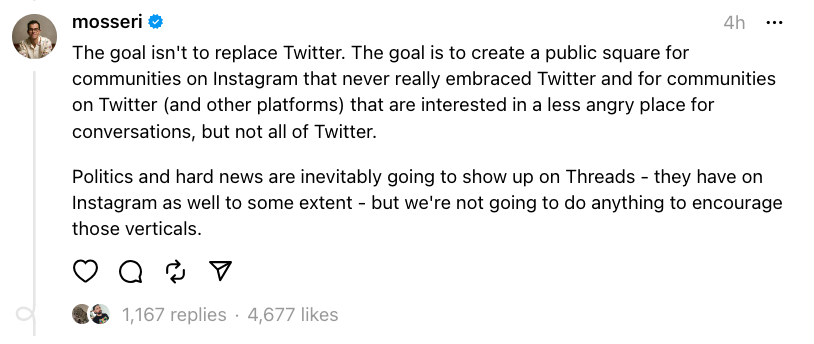
In a reply to a question from The Verge’s Alex Heath, Instagram head Adam Mosseri, currently the default hype guy for Threads too, said that Meta’s goal isn’t to replace Twitter, but rather “to create a public square for communities on Instagram that never really embraced Twitter and for communities on Twitter (and other platforms) that are interested in a less angry place for conversations, but not all of Twitter.”
He continued:
“Politics and hard news are important, I don’t want to imply otherwise. But my take is, from a platform’s perspective, any incremental engagement or revenue they might drive is not at all worth the scrutiny, negativity (let’s be honest), or integrity risks that come along with them.
There are more than enough amazing communities – sports, music, fashion, beauty, entertainment, etc – to make a vibrant platform without needing to get into politics or hard news.”
Mosseri’s take here is strange and fairly alarming for a few reasons. For one, it echoes some of the anodyne ways that Facebook has described itself over the years: just a big, friendly, neutral place where people could “connect” — Mark Zuckerberg’s favored pitch and one that conjures images of a male and female USB cable making love. Contrary to its stated neutrality, his company ritualistically incentivized particular forms of content and behavior, driving Facebook users deeper into ideological echo chambers while fanning the flames of the polarization and extremism that plagues global politics today.
As the former head of Facebook’s News Feed, Mosseri knows all of this, yet seems to be taking away the wrong lessons.
After being cowed by its embarrassing failures during the 2016 presidential election and its subsequent role in hosting the Stop the Steal movement, which culminated in the January 6 attack on the U.S. Capitol, Facebook opted to rebrand and retreat. It’s strange that Mosseri pretends that Meta’s desire for a social network floating in a vacuum, never influencing the world for the better or the worse, is in any way achievable.
Of course, “politics and hard news” will find their way onto Threads; they already have — see anti-LGBTQ hate group Libs of TikTok testing the waters there. Without Meta’s investment in or preparation for counterbalancing forces, extremism and viral misinformation will outcompete whatever legitimate news sources opt to invest resources in the new app.
Meta obviously has no interest in boosting journalism these days. The company has long been happy to extract what it wants from news orgs while offering bait and switch tactics in return, if that. Meta is currently blocking access to news in Canada to protest a new law that requires the tech giant to compensate publishers. (The company is currently worth $745 billion.)
Meta’s anti-journalism crusading aside, Mosseri’s take on the public square is squarely ahistorical.
Instagram and now Threads are obsessively designed to shuffle normal users together with brands, encouraging commercial activity at every turn. And while the lofty notion of a virtual public square or town hall is evoked often by social media execs to further the agenda of the day, public squares aren’t just the domain of trade and commerce. Historically, they’re also the heart of culture and a place for political discourse — itself a pesky and unavoidable side effect of existing within a society.
Surely Mark Zuckerberg — a self-styled Classics guy who named his children after Roman emperors — would know that the Roman Forum was not just a rustic shopping center but a place where people could gather, engage in political life and hear the news of the day.
Meta’s insistence on a diminished, commodified version of public life stuffed to the gills with advertising fits the company’s narrow vision, but it’s a disappointing if predictable turn for a promising Twitter successor to take so little interest in the world itself.
Discover the best digital marketing tools, normally $27 as my free gift. FREE|Success
It’s that time of week again, folks. Welcome to Week in Review (WiR), TechCrunch’s regular digest of the past week in tech. New here? Not to worry — sign up here to get WiR in your inbox every Saturday, then read on for the week’s recap.
This week, we’re covering Netflix quietly axing its basic plan in Canada, the IRL social app shutting down after it was discovered that most of its users were fake and the blockbuster sales of the Flipper hacking device. Also in store, TC has reporting on Lenovo’s Yoga Book 9i dual-screen laptop, DeepMind’s next chatbot to rival ChatGPT and Robinhood acquiring a credit card startup. Phew.
Most read
Netflix axes basic plan — in Canada: Netflix has quietly killed the $9.99 CAD per month basic plan in Canada for new subscribers. This simplifies the streaming company’s offering but leaves a big gap between the ad-supported plan and the standard plan, Ivan writes.
A unicorn social app shuts down: Ironically, the social app IRL‘s users don’t exist in real life. An internal investigation by IRL’s board of directors found that 95% of the app’s reported 20 million users were automated or from bots. So, after raising more than $200 million in venture capital, IRL is shutting down.
A laptop, but double: Lenovo’s Yoga Book 9i drew both appreciative and skeptical stares at CES earlier this year when it made its official debut. With two 13-inch OLED screens attached with a central hinge, it’s one of the most unusual laptop designs to ever make it into actual production. And, according to Darrell, it’s the first that proves the dual-screen paradigm can work — and work really well — for a lot of people.
Flipper sells like hotcakes: You may have stumbled across the Flipper Zero hacking device that’s been doing the rounds, which includes a bunch of ways to manipulate the world around you — including RFID card systems, remote keyless systems, key fobs, barriers to entry and more. The company claims that it’s on track to sell $80 million worth of products this year after selling almost $5 million worth as Kickstarter preorders — and claims it sold $25 million worth of the devices last year.
Robinhood acquires X1: Robinhood announced on Thursday that it would acquire no-fee credit card startup X1 for $95 million in cash. X1, which offers an income-based credit card with rewards, has raised a total of $62 million in venture-backed funding from investors like Soma Capital, FPV, Craft Ventures and Spark Capital since its 2020 inception.
Shein’s stunt backfires: As Shein eyes an IPO, the company’s image needs a serious makeover. From stealing indie designers’ work to violating local labor laws, Shein has fallen out of vogue on social media — so the company invited a group of influencers to tour one of its factories in Guangzhou, China. Critics point out that it was a highly curated brand trip wherein influencers were offered free travel opportunities and gifts, encouraging them to promote a favorable image of the company.
Databricks acquires MosaicML: This week, Databricks announced that it’ll pay $1.3 billion to acquire MosaicML, an open source startup with neural networks expertise that built a platform for organizations to train large language models and deploy generative AI tools based on them. Prior to that, MosaicML had raised just under $64 million from investors, including Atlas, Playground Global and Samsung Next.
ChatGPT gets Bing:ChatGPT on mobile can now surf the web. But only via Bing — for better or worse. This week, OpenAI announced that subscribers to ChatGPT Plus, the premium version of the company’s AI-powered chatbot, can use a new feature on the ChatGPT app called Browsing that lets users use ChatGPT to search Bing for answers to questions.
Audio
Hunting for a podcast to while away the hours? You’ve come to the right place. TC has you covered.
On Equity, the crew kicked things off with Honey Homes’ recent funding and Gusto’s teaming up with Remote; they then dove deep into the latest wave of M&A, from Visa’s purchase of Pismo to Databricks’ deal with MosaicML.
Meanwhile, Found featured the founders of Spout, a startup that makes a device that can pull fresh drinking water out of the air.
Over at Chain Reaction, this week’s episode welcomed Jack Lu, co-founder and CEO of NFT marketplace Magic Eden, to discuss the state of the crypto market.
And The TechCrunch Podcast covered Shein inviting several fashion influencers to its facilities in China. The internet didn’t take kindly to the stunt.
TechCrunch+
TC+ subscribers get access to in-depth commentary, analysis and surveys — which you know if you’re already a subscriber. If you’re not, consider signing up. Here are a few highlights from this week:
M&A is back: It’s been a quiet year when it comes to tech M&A. But suddenly this week, it’s as though the M&A floodgates finally opened and we started to see some movement.
Big Tech embraces generative AI: As the race to build generative AI tools for the enterprise devolves into a battle royale, Big Tech companies are busy wielding their most powerful weapons: checkbooks. Will the trend continue? That’s an open question.
When companies have more influence than countries: According to the CIA’s World Factbook, if Apple were a country, its revenue would be No. 50 on the list of countries ranked by GDP. While it’d lag the likes of the U.S., France and Egypt, as a country, Apple would produce more wealth than Norway, Portugal or Greece, and only slightly less than Hong Kong, Peru or Israel. Should it be this way? Haje explores.
Get your TechCrunch fix IRL. Join us at Disrupt 2023 in San Francisco this September to immerse yourself in all things startup. From headline interviews to intimate roundtables to a jam-packed startup expo floor, there’s something for everyone at Disrupt. Save up to $600 when you buy your pass now through August 11, and save 15% on top of that with promo code WIR. Learn more.
Discover the best digital marketing tools, normally $27 as my free gift. AUDIT|Success
Seoul-based e-commerce company Levit, an operator of the shopping app Alwayz, wants to make the shopping experience more entertaining and affordable. The two-year-old startup has recently raised $46 million in a Series B round of funding led by DST Global Partners with participation from new investor BOND and existing backers KB Investment, Mirae Asset Capital, Korea Investment Partners, GS Ventures, and Klim Ventures. With the latest round, Levit has raised a total of $67 million since its inception.
Alwayz offers a wide range of products, from daily groceries to home appliances and apparel to cosmetics. But it deviates from typical e-commerce platforms by incorporating social features like short videos and gamification into online shopping to draw customers.
For example, users can earn rewards by playing games nurturing the pig character Don-Don-E, or receive crops in real life after successfully cultivating crops by playing a game called AI-Farm in its app. In addition, Alwayz recently introduced a “Shorts” feature that allows users to watch short videos and, in return, get discounts when shopping.
It also attracts customers with low-price products. Users get discounts if they purchase products with other users or their friends on Alwayz. Alwayz’sC2M (consumer-to-manufacturer) model removes layers of distributors, including logistics, inventory and other intermediaries, allowing the app to offer high-quality products at lower prices. Most sellers on Alwayz are producers or manufacturers, according to the company.
“Our average product selling price is around 20% cheaper than the lowest prices on other e-commerce platforms,” chief executive officer and co-founder of Levit, Jaeyun Kang, said. “This has been made possible because lesser-known brands, which traditionally spent nearly 30-50% of the selling price on marketing in search-based [e-commerce] platforms, can now sell their products more efficiently on Alwayz throughdiscovery-based shopping.”
Levit says games and social features help users enter the Alwayz app daily and be exposed to various products, even if they do not immediately intend to buy.
“As users enjoy the engaging experience on our platform, we leverage their high engagement to expose them to a range of items through our recommendation algorithms. This way, even if items are from lesser-known brands, customers can discover and buy them,” Kang said. Levit describes this user experience as a “discovery shopping experience.”
When asked about how it ensures low-priced products are high-quality, the company CEO said its recommendation algorithms assess all items on Alwayz, using factors such as conversion and customer repurchase rates. “We ensure an item isn’t widely exposed until it has proven its quality, and this approach allows us to maintain the quality of items,” he said.
Image Credits: Levit / Alwayz
Since its launch in September 2021, the startup claims Alwayz has amassed 1 million users within three months and has reached 7 million users, 2.5 million monthly active users (MAUs) and 1.3 million daily active users (DAUs) in one and a half years.Alwayz aims to secure more than 12 million registered users, 5 million MAUs, and 3 million DAUs by the end of 2023, Kang said, adding that it has nearly 20,000 sellers registered on the app.
Three founders of Levit — Kang, Sangwoo Park and Hyunjik Lee — have set their sights on two ambitious goals: establishing Levit as the leading e-commerce company in South Korea and capturing a significant share of the global discovery shopping market.
Alwayz has to compete with local peers, the likes of Coupang, Naver and Kurly, but its business model is more similar to the U.S.-listed e-commerce Pinduoduo and China-based AliExpress in terms of social features and lower-price products.
The outfit, which has 20 people on the team, is planning to bring its platform to the U.S. market as early as this year.
“Disruption in horizontal commerce is rare,” said Daegwon Chae, general partner of BOND. “Dislodging large incumbents requires meaningfully better, faster, cheaper experiences, which are difficult to achieve in a mature and efficient market. Alwayz has broken through with its relentless focus on user experience, engagement and value.”
Discover the best digital marketing tools, normally $27 as my free gift. AUDIT|Upgrade
Three years after one of the most visible hacks in recent history played out in real-time in front of millions of Twitter users, one of the hackers responsible for the breach will now serve time in federal prison.
Joseph James O’Connor, 24, was sentenced Friday in a New York federal court to five years in prison after pleading guilty in May to four counts of computer hacking, wire fraud and cyberstalking. O’Connor also agreed to forfeit at least $794,000 to the victims of his crimes.
O’Connor, a U.K. citizen, was extradited from Spain at the request of U.S. prosecutors earlier this year and has remained in custody since.
In the hearing, Judge Jed S. Rakoff said O’Connor will likely serve about half of his sentence after spending more than two years in pre-trial custody.
O’Connor faced a maximum of 77 years in prison, according to Reuters. Justice Department prosecutors called for O’Connor to serve at least seven years in prison.
In court, O’Connor said his crimes were “stupid and pointless,” apologized to his victims, and asked the judge for leniency.
According to prosecutors, O’Connor “used his sophisticated technological abilities for malicious purposes — conducting a complex SIM swap attack to steal large amounts of cryptocurrency, hacking Twitter, conducting computer intrusions to take over social media accounts, and even cyberstalking two victims, including a minor victim.”
The government said O’Connor, known by his online handle PlugWalkJoe, was part of a group that broke into dozens of high-profile Twitter accounts, including Apple, Binance, Bill Gates, Joe Biden and Elon Musk, to spread cryptocurrency get-rich-quick scams in July 2020.
O’Connor used phone-based social engineering techniques to trick Twitter employees into granting the group of hackers access to Twitter’s network. One of the other hackers convicted of the Twitter breach, Graham Ivan Clark, also known as Kirk, used the access to Twitter’s network to abuse an internal admin tool to hijack and reassign Twitter user accounts.
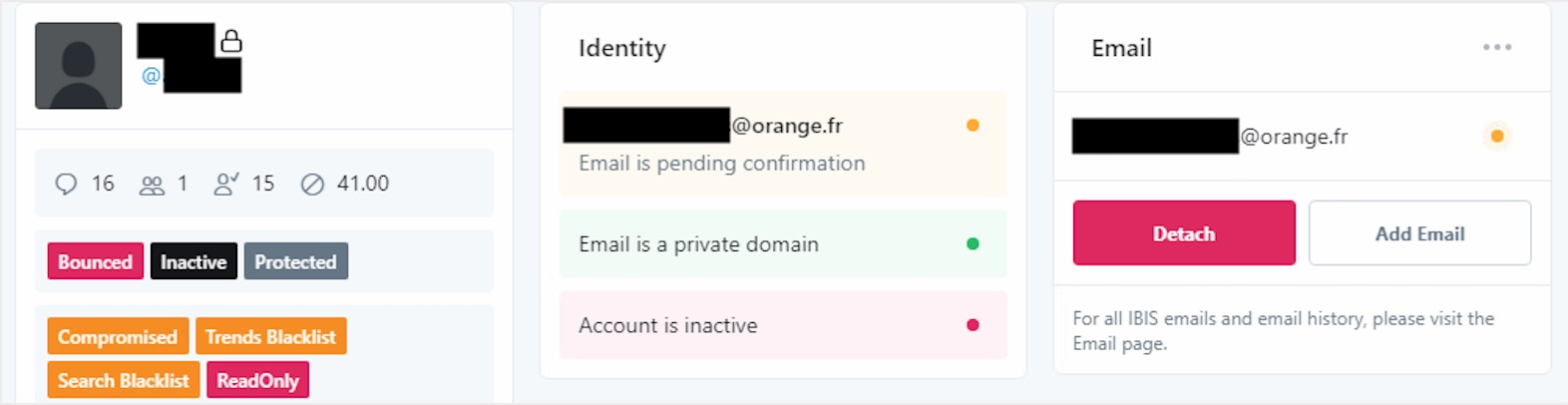
A screenshot of the Twitter admin panel that the hackers breached in order to reassign access to Twitter user accounts. Image Credits: TechCrunch (supplied)
Twitter temporarily blocked users from posting to the site as it grappled with the intrusion, as millions of users watched in real time as their timelines flooded with cryptocurrency scams from some of the most recognizable names on the planet.
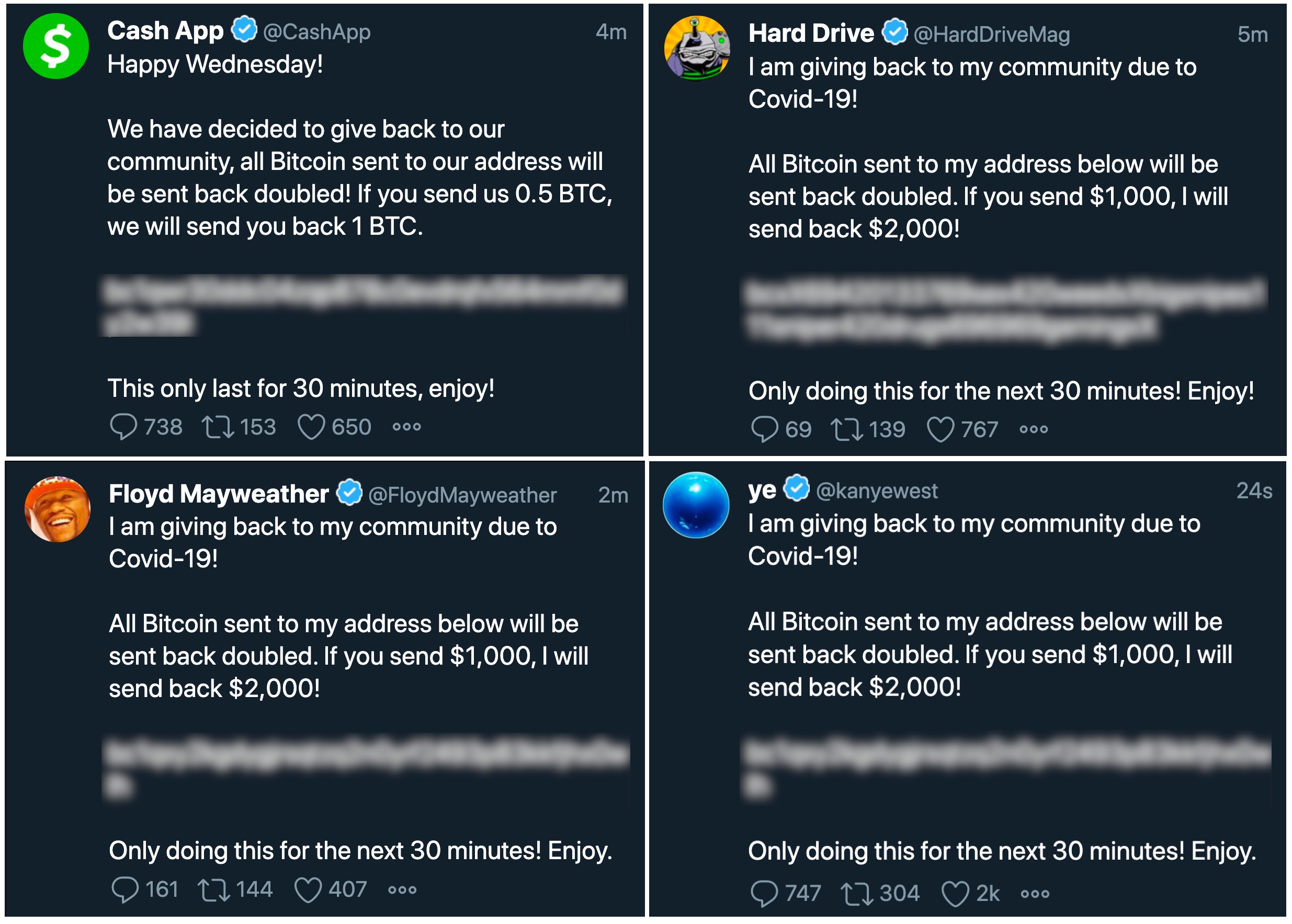
A subsequent investigation by New York’s Department of Financial Services, which accused Twitter of inadequate cybersecurity protections, found that the hackers broke in by “calling Twitter employees and claiming to be from Twitter’s IT department,” then hijacked the Twitter accounts of politicians, celebrities, and entrepreneurs to tweet “double your bitcoin” scams.
The scam netted about $120,000, according to public blockchain records.
Several of the tweets that were published during the 2020 Twitter hack. Image Credits: TechCrunch
The breach prompted Twitter to improve its cybersecurity controls, introducing hardware security keys for its employees to prevent future phishing attempts.
Two years on from the hack, more explosive allegations about the breach came to light.
Peiter “Mudge” Zatko, who was hired as Twitter’s head of security months after the breach, later described the hackers’ access as achieving “god mode,” which allowed them to imposter-tweet from any account they wanted. Zatko called the incident “the largest hack of a social media platform in history” in a whistleblower complaint filed with federal regulators in 2022, in which Zatko accused his former employer of cybersecurity failings.
Twitter auto-replied with a poop emoji in response to an emailed request for comment, as it has done since a short time after Elon Musk acquired the company.
Discover the best digital marketing tools, normally $27 as my free gift. AUDIT|Upgrade
Shoppable Business Chris Blanquera, Sam Blanquera and Carlo Silva
Shoppable Business wants to make it easier for businesses in the Philippines to source and procure branded products and other inventory, with an emphasis on making sure products are authentic. The B2B e-commerce marketplace announced it has closed what it says was an oversubscribed pre-seed funding round of $1.15 million.
The round was co-led by Foxmont Capital Partners and Seedstars International Ventures, along with angel investors. Shoppable Business previously got backing from AHG Lab.
Shoppable Business was founded in 2022 by a team including Carlo Silva, who previously started and exited e-commerce business process outsourcing company 2ndOffice. The founders also include Sam Blanquera and Chris Blanquera, who co-founded and existed Openovate Labs and Galleon.ph.
Silva told TechCrunch that after working at startups and conglomerates in the Philippines since 2013, Shoppable Business’ founding team noticed that there was a huge gap in the marketplace for a efficient digital procurement process. “The traditional methods were slow, opaque and painstakingly manual and it was hard to find trusted suppliers,” he said.
One problem that businesses face when procuring online is not knowing if goods are authentic. While there have been a lot of e-commerce innovations in the Philippines, like social commerce, a lot of them are targeted toward consumers. But businesses often have to rely on Facebook Marketplace and classified ads for procurement, which means processing orders is a time consuming business.
Silva said that in the Philippines, the traditional procurement process is manual, with orders usually processed through messaging apps, email or in person. Quotations are sent through word documents or spreadsheets. “It’s also difficult to search for authentic products online, and to compare quotations as they are funneled through messenger apps and email, making it an inefficient process,” he said.
Shoppable Business is aimed at businesses that want to procure goods quickly and more cheaply, but don’t have a dedicated procurement team. It also works with companies that manufacture their own brands and distributors. The platform specializes in branded products and services for resellers.
Shoppable Business helps them by operating as a horizontal B2B marketplace for products and services from multiple categories. In addition to using the platform to find products, businesses can also access services like marketing, sales support, procurement outsourcing, logistics, financing and payment infrastructure. Shoppable Business also issues official BIR (Bureau of Internal Revenue)-certified sales invoices and receipts, which companies need in the Philippines to claim the full purchase. To ensure authentic products, Shoppable Business is a marketplace partner of GS1 Philippines (GS1 is the standard for barcodes and product identification in 116 countries, and has 2 million member companies).
In terms of convincing sellers and businesses to move off Facebook Marketplace and the other platforms they are currently using, Shoppable Business makes the process easier by providing a single product listing catalog feature, which means if a product is already in its catalog, sellers don’t need to recreate the product listing. Instead, they can start selling it with a few clicks, by inputting their selling price, stock and any bulk discounts they would like to offer.
Sellers also get their own store on Shoppable Business that enables them to accept payments from different options like Gcash, Maya, credit cards, bank transfers and even check or manual bank deposits. Shopppable Business also does away with the hassle of shipping by arranging deliveries through third-party logistic partners.
To make it easier for sellers to move their current customer base to Shoppable Business, the platform offers a program called Shoppable Direct which enables them to refer existing customers to become buyers. Shoppable will tag seller’s customers as their direct customers if they buy something from the seller that referred them. It also waives marketplace fees for the buyer.
Silva said the wide array of services Shoppable Business offers sellers and buyers, like sales support, procurement outsourcing and logistics, helps it compete with other B2B marketplaces. In addition, it guarantees the issurance of BIR (Bureau of Internal Revenue)-certified sales invoices and receipts for every transaction, and also protects product authenticity through its partnership with GS1 Philippines.
The funding will be used to hire for Shoppable Business’ business development team, product and feature development and expanding into new markets in Southeast Asia. Silva said the startup will target new markets by the first half of 2024.
In a statement about the investment, Foxmont Capital Partners managing partner Franco Varona said, “Sourcing and procurement have traditionally been a very manual and a very challenging experience in the Philippines. The lack of transparency in pricing and difficulty in finding goods at scale and quickly is something Filipino companies have had to deal with for too long. Shoppable Business helps to directly solve that problem, and we believe Carlo and his team are exactly the right team to do it.”
Discover the best digital marketing tools, normally $27 as my free gift. SEO|Success
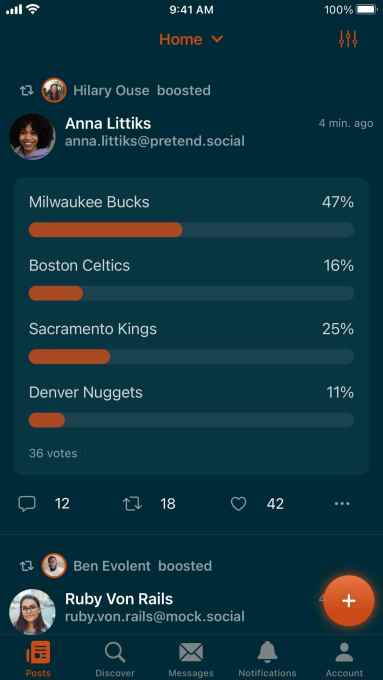
While platforms like Reddit and Twitter are changing rules and making life difficult for developers of third-party clients, the ecosystem of Mastodon apps is still growing. Today, indie developer Jake Nelson released a simple iOS app called Radiant, which focuses on simple and functional design.
Other clients, such as Ivory, Mammoth, and Woolly are made by developers who had popular Twitter clients before the Elon Musk platform ostracized them. However, Nelson had no social media app in his development portfolio. He has released various apps like a cookie blocker for Safari, a barcode scanner app to store them in a digital wallet, and a word game under a company called Small Colossus.
Nelson said that he started making Radiant because he had moved to Mastodon and didn’t find any suitable app for the decentralized social network.
“I found that with the rollout of Twitter Blue and the algorithm changes my feed became noticeably worse. A lot of the iOS community on Twitter started talking about moving to Mastodon, and then did, so I took the plunge and did the same. I started to thoroughly enjoy the platform very quickly, but there wasn’t an iOS app that suited me perfectly. Apollo by Christian Selig was previously my most used social media app, by far, and is probably my favorite iOS app ever, and nothing I tried had a similar feel to it,” he told TechCrunch over email.
Image Credits: Radiant.social
Radiant lets you sign in to your existing Mastodon account or create an account on a suggested server. There are plenty of options for posting content including polls, high-quality media, multi-language support and a thread creator tool.
The app has some neat features that are nice to have. For instance, you can filter out duplicate boosts or boosts that you have already seen, show/hide counts for boosts and favorites, display a ring around profile picture of an account which follows you back, and enable advanced post-filtering options.
Image Credits: Radiant.social
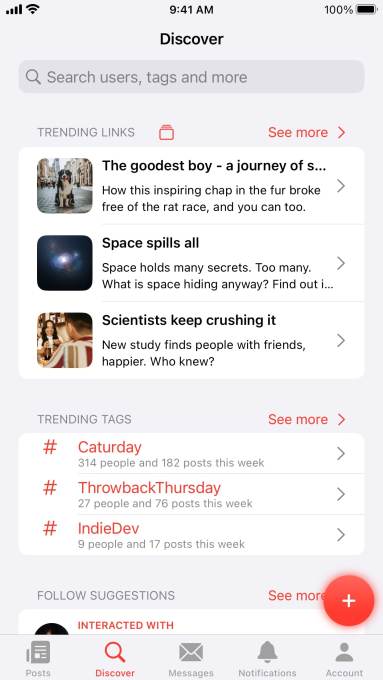
One of the biggest challenges with Mastodon is to discover people to follow. Radiant provides recommendations based on people you follow and have interacted with. Nelson said that recommendation features including people, trending hashtags, and popular articles are dependent on the instance where your account has been hosted. He said that he is trying to tap into bigger instances to include some trends from those servers.
Nelson admitted that some parts of the feature set might look like it is overlapping with other popular Mastodon clients, but its unique design and the ability to personalize the interface are the biggest differences. He said that, at this moment, Radiant might cater more to people who are already on Mastodon — but down the line, he wants the app to contribute towards people discovering and joining Mastodon and potentially the broader decentralized social media ecosystem.
Image Credits: Radiant.social
Radiant is free to use app with most features available without any cost. For $1.99 per month, users can get a Premium account and features like custom themes and icons, push notifications, and support for multiple accounts.
“I view Mastodon as truly open, in that it is open source and its foundations center around interoperability and API access, compared to Reddit and Twitter where the API access can be taken away. While Mastodon the software is technically built and run by a company, that company is a non-profit organization. Mastodon gGmbH also runs the largest Mastodon instances mastodon.social, but I don’t think there is any risk of the API going away or becoming paid which would threaten the future of Radiant, as the non-profit’s goals are broadly toward openness and greater access to the decentralized social web,” he said.